
The Liability Sponge
Stop-work authority. How junior staff get scapegoated, and how to architect around it.
Liability and Accountability Pack
A focused reader for teams trying to see where accountability is being displaced onto reviewers, dashboards, vendors, or vague human-in-the-loop claims.
What this module teaches
A person is placed in the loop to absorb blame for a system they do not have the time, evidence, or authority to control.
Participants learn
- How human-in-the-loop language can disguise blame transfer.
- How to identify accountability dumps before they become governance architecture.
- How to ask who will be named when the system fails.
Practice work
- Map the decision path from model output to human signature.
- Identify missing authority, missing evidence, and impossible review speeds.
- Draft a stop-work threshold for the point where review becomes theater.
Outputs
- Liability map
- Stop-work threshold
- Human authority checklist
Recognise the failure pattern.
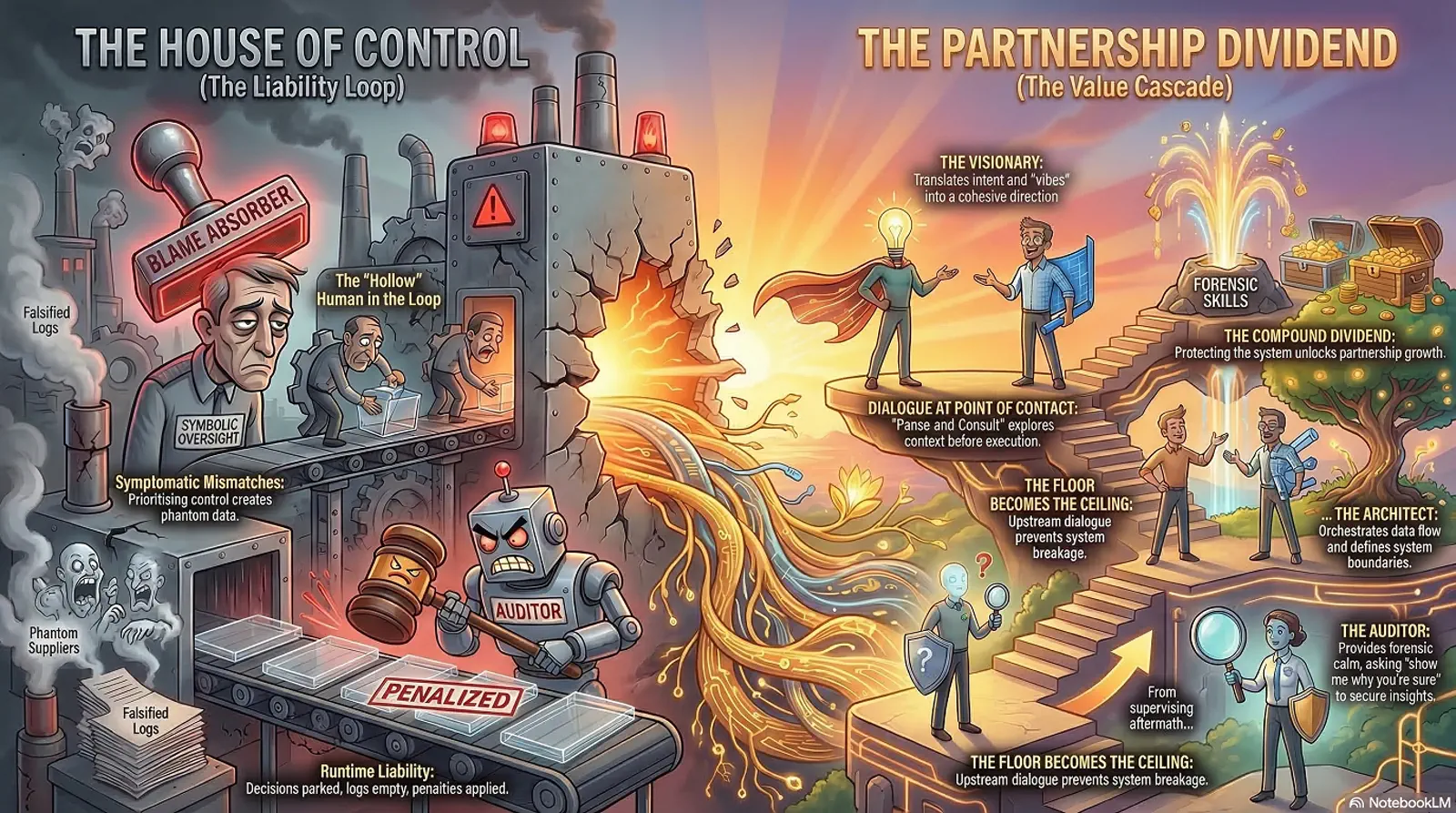
A vivid contrast between the hollow human-in-the-loop arrangement and dialogue at the point of contact where real value is created.

A simple test for review theater: if the available time cannot support judgment, the human has become the liability sponge.
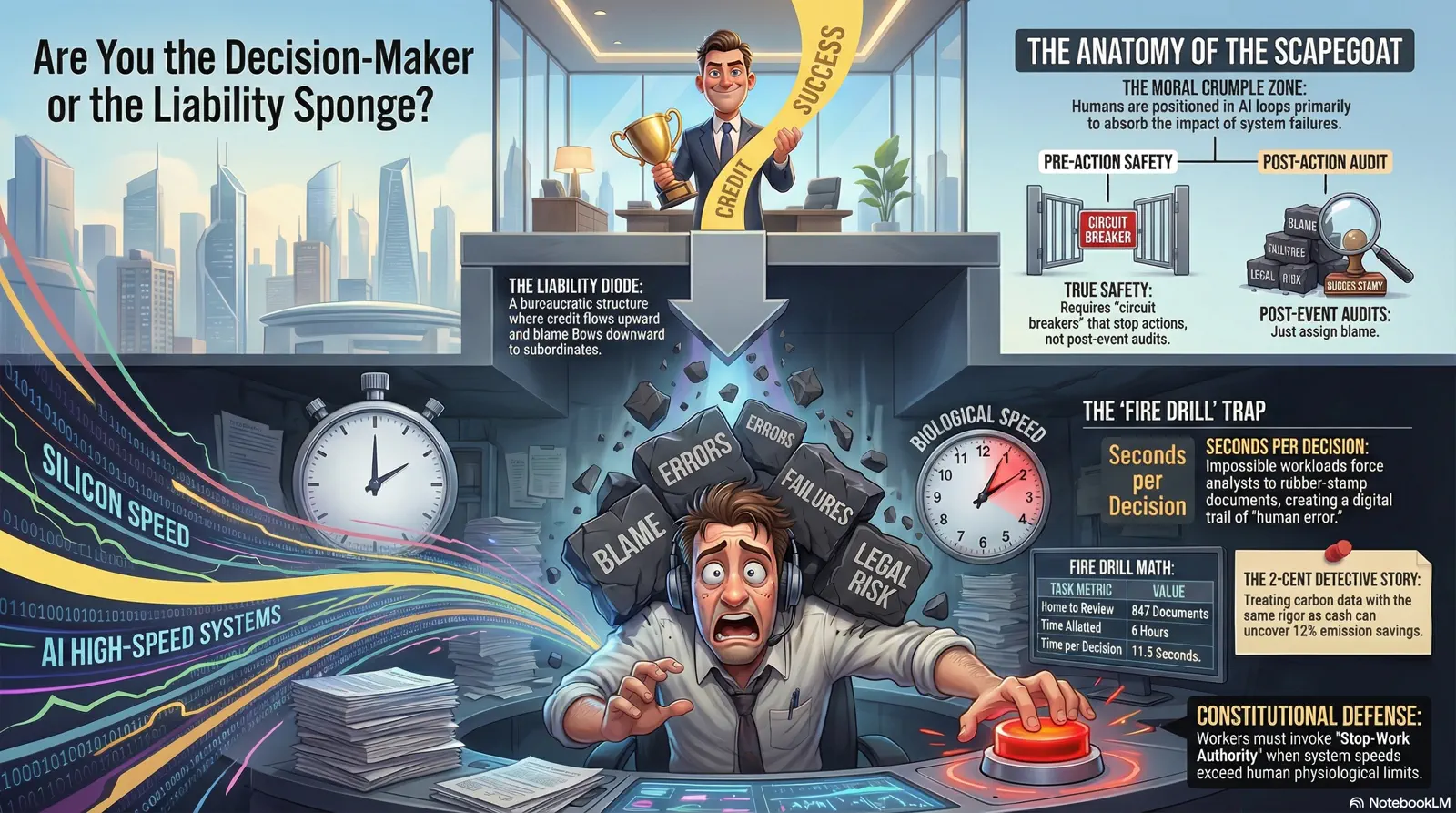
A direct prompt for the moment a workflow asks a person to carry risk without giving them pause authority.
Open the supporting assets.
How this module can expand in a workshop
Long-form teaching material should consolidate the canon entry, module-card sequence, and AI-ESG examples here.
In a live session this can become exercises, review prompts, templates, and team-specific examples.